

Table of Contents
Bleeding Gums: Causes, Signs & Importance of Early Treatment
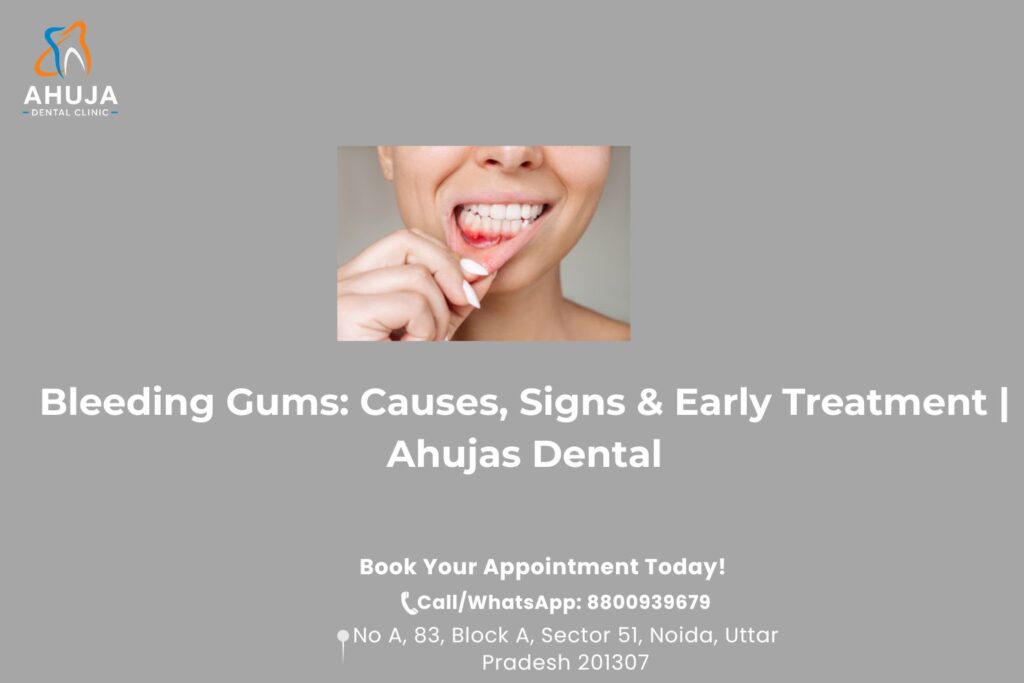
Bleeding gums can be a frequent dental problem especially when brushing and flossing. Most people tend to disregard it assuming it is normal or temporary. Nonetheless, bleeding gums are usually your body sending you the first signal that your gums require attention.
The best part?
Bleeding gums become manageable and treatable with timely intervention and good oral care.
Is It Normal for Gums to Bleed?
No healthy gums do not bleed.
If you have a habit of your gums bleeding, even without pain, it is most likely a sign of:
- Gum inflammation
- Bacterial plaque along the gumline
- Beginning stage of gum disease
The bleeding may look very slight at first, but by not taking notice of it, you give the gum a chance to get damaged without the damage being visible.
Common Causes of Bleeding Gums
Bleeding gums can occur due to several reasons, including:
1. Plaque and Bacterial Buildup
When plaque accumulates around the gumline, it irritates the gums and causes inflammation, leading to bleeding.
2. Gingivitis (Early Gum Disease)
Gingivitis is the earliest stage of gum disease and the most common cause of bleeding gums. At this stage, gums may appear red, swollen, and bleed easily.
3. Improper Brushing or Flossing
Brushing too hard or using a hard-bristled toothbrush can injure sensitive gums.
4. Poor Oral Hygiene
Irregular brushing, flossing, or dental cleanings allow bacteria to grow around the gums.
5. Vitamin Deficiency or Health Conditions
In some cases, vitamin deficiencies or medical conditions can also contribute to gum bleeding.
Signs You Should Not Ignore
You may need dental evaluation if you notice:
- Gums bleeding while brushing or flossing
- Red, swollen, or tender gums
- Persistent bad breath
- Gums pulling away from teeth
- Bleeding without pain
Pain is not always present, especially in early gum disease.
Why Early Treatment Is Important
If you ignore bleeding gums, that can lead to:
- Progression to advanced gum disease
- Gum recession
- Tooth sensitivity
- Loss of teeth either due to mobility or detachment
Early treatment helps to staunch bleeding, relieve inflammation, and safeguard not only the gums but also the teeth.
How Bleeding Gums Are Treated
Treatment depends on the cause and severity but may include:
- Professional dental cleaning
- Gum care and plaque removal
- Oral hygiene guidance
- Gentle gum therapy
With proper treatment, gums can heal, strengthen, and remain healthy long-term.
How to Prevent Bleeding Gums
You need to do these actions for proper gum protection:
- Brushing twice daily with a soft-bristled toothbrush
- Flossing gently every day
- Maintaining regular dental checkups
- Patients need to get medical attention right away when they first start to experience bleeding.
When Should You See a Dentist?
If your gums usually bleed or if the bleeding continues for more than a few days, it is wiser to seek the help of a dentist. Getting a check-up early is the easiest, most comfortable, and least stressful way to have it done.
Visit Ahujas Dental for Gentle Gum Care
At Ahujas Dental , we focus on gentle, preventive, and patient-friendly dental care to restore gum health and prevent future problems.
📞 +91 88009 39679📍 No A, Ahujas Dental, 83 Block A, Sector 51, Noida 201307